Dysregulated nervous system is not an official diagnosis in the way social media often uses the phrase. It can describe difficulty settling after stress, but fatigue, a racing heart or feeling detached cannot tell you the cause by themselves. You deserve an assessment of persistent symptoms, not a sales pitch for a gadget.
What Is a Dysregulated Nervous System? Signs and What Can Help
What does the phrase mean?
Licensed clinical social worker Mitchell Hale tells Prevention that therapists use the phrase for trouble returning to a settled baseline after a perceived threat. It is descriptive language, not a test result or a single condition with one treatment.
Harvard Health's explanation of the stress response uses a helpful analogy: sympathetic activity acts like an accelerator, preparing the body to respond, while parasympathetic activity helps it settle afterwards. These are interacting systems, not a switch you have broken.
Stress responses have a purpose. The aim is not to eliminate every difficult feeling or stay relaxed through every situation. A demanding day and a medical disorder also cannot be distinguished by a short online checklist.
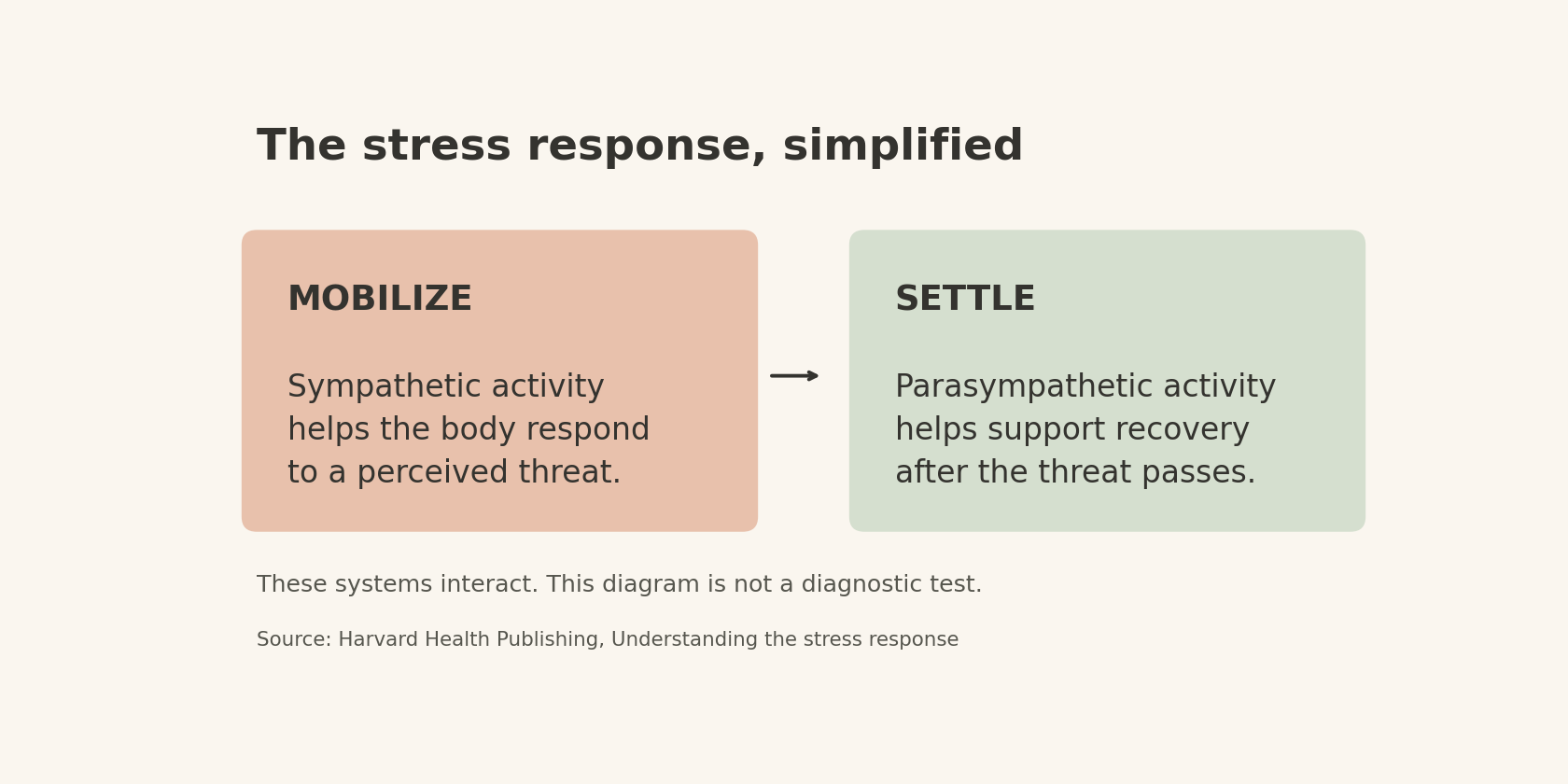
Simplified from Harvard Health; these systems interact, and this is not a diagnostic test. Select the image for the full-size version.
Feeling wired or shut down
Counselor Bonnie J. Mitchell, D.B.H., L.P.C.C., describes two broad patterns in Prevention. Here is a shortened version of that framework:
| Feeling “on” | Feeling “off” |
|---|---|
| Tense, irritable, watchful or unable to settle | Drained, foggy, detached or unmotivated |
| Sometimes a racing heart or shallow breathing | Sometimes heavy fatigue or weakness |
These are nonspecific experiences, not diagnostic categories. The “dorsal vagal” explanation sometimes attached to shutdown language is a debated framework; this table does not establish a physiological cause for your symptoms. New, persistent or troubling physical symptoms should be assessed by a clinician, rather than assumed to be stress.
What you can try without buying anything
Choose something manageable rather than making regulation another project to perform perfectly. Cleveland Clinic neurologist Emad Estemalik describes several low-cost approaches:
- Comfortable slow breathing. His example is inhaling for four seconds and exhaling for six. Keep it easy; stop if it makes you feel unwell.
- Movement you can manage. Walking, swimming or cycling are examples; an intense workout is not required.
- Sound you find calming. Humming or listening to steady, soothing music may help you settle.
Predictable routines and social support also matter. Harvard's stress-response guide discusses exercise, relaxation practices and supportive relationships. An achievable plan might be a short walk, a meal and a conversation with someone you trust. You do not have to complete a long checklist before asking for help.
For more everyday ideas, browse our stress-relief suggestions. Use what is comfortable and appropriate for you, rather than treating any one exercise as a cure.
What about cold exposure?
You may see cold splashes or cold showers described as a vagus-nerve “reset.” They are optional, not a necessary step or a substitute for care. Cleveland Clinic advises checking with a provider before trying new techniques, especially if you have a heart condition or irregular heartbeat, take medication affecting the nervous system, have fainting or low-blood-pressure history, or are pregnant. That precaution is particularly relevant before experimenting with cold exposure.
There is no need to escalate to an ice bath to prove that you are trying hard enough. This guide does not prescribe a cold-exposure routine.
Can you heal your nervous system?
Be cautious with a promise that a course, supplement or device can permanently remove stress. Feeling calmer after an exercise does not prove that it treated an underlying condition. Equally, finding an exercise unhelpful does not mean you failed.
The useful goal is to understand what is happening, find support that fits and address any actual condition a qualified professional identifies. A phrase can help describe an experience while still being too broad to guide treatment.
When to speak to a doctor or therapist
Seek help when symptoms persist, interfere with sleep or daily life, or make looking after yourself difficult. A doctor can consider physical causes; a licensed mental-health professional can assess emotional symptoms and discuss appropriate treatment. You do not need to diagnose yourself before booking an appointment.
Therapy is individualized. Approaches such as cognitive behavioral work or trauma-focused therapies are chosen for the person's needs and diagnosis, not because a social-media quiz assigned a nervous-system type. Severe or sudden physical symptoms should not be managed as a routine stress exercise.
If you are in emotional crisis in the US, call or text 988, or use the 988 Lifeline chat. Support is available around the clock. If there is immediate danger, contact emergency services. Outside the US, use local crisis or emergency services.
Frequently asked questions
Is a dysregulated nervous system a diagnosis?
The phrase as used in this wellness discussion is descriptive, not an official standalone diagnosis. Persistent symptoms need assessment.
What are the signs?
People describe feeling wired, tense, exhausted or detached, but these experiences overlap with many conditions and situations.
How can I calm down quickly?
Try a comfortable slow breath or a manageable change of activity. There is no guaranteed instant reset, and physical symptoms may need medical attention.
Can I heal it permanently?
No routine can promise a life without stress. Appropriate care depends on what is causing your symptoms.
When should I see a therapist?
When distress persists, affects daily functioning or feels difficult to manage, professional support is reasonable; you do not have to wait until a crisis.
General information, not a diagnosis or treatment plan. Independent physician and licensed therapist reviews are pending.
Browse categories
Cooking Diy Gardening Beauty Love Fitness Food Apps Teen Perfumes Movies Music Paranormal Health Weightloss Twilight Shoes Parenting Makeup Skincare Money Inspiration Wedding Celebs Streetstyle Nails Running Lifestyle Fashion Travel Diet Hair Books Jewelry Funny Bags Mindfulness Gifts Desserts Interior Sleep Accessories Gadgets Baking Swimwear Bodyart
Likes, comments and replies are available on the full version.
View full article & comments →