Alcohol raises breast cancer risk, including at low levels of drinking. That does not mean one drink guarantees cancer, or that a person who develops cancer caused it by drinking. It means alcohol is one exposure you can reduce, alongside discussing your overall risk and appropriate screening with a clinician.
The phrase no safe amount can sound hopeless if you hear it as all-or-nothing advice. The useful message is that a low-risk limit is not the same thing as zero cancer risk. You can understand what the evidence says, distinguish relative and absolute risk, and choose practical ways to cut back without turning every social occasion into a health calculation.
This is general health information, not a personal diagnosis or prevention plan. If you are worried about your own history, medicines, symptoms or ability to stop drinking safely, bring those questions to a clinician. You deserve clear information and support without blame.
What the evidence says
The National Cancer Institute's alcohol fact sheet describes strong evidence that alcohol causes several cancers. It notes higher breast cancer risk at one drink daily than at less than one weekly, with risk increasing as drinking rises. Its breast-cancer table reports relative risks of approximately 1.04 for light, 1.23 for moderate and 1.6 for heavy drinking compared with not drinking. The categories summarize research, not your individual prognosis.
The American Cancer Society recommends avoiding alcohol for cancer prevention. Beer, wine and spirits all count: the type of drink does not remove the risk from ethanol. ACS describes several possible mechanisms, including changes involving estrogen and the damaging breakdown product acetaldehyde. Red wine is not a cancer-prevention exception.
Those statements are not a reason to blame yourself for past choices. Cancer has multiple causes and risk factors, and many are outside a person's control. Prevention guidance helps inform choices going forward; it does not explain why a particular individual became ill.
Thanks for your feedback! Couldn't send feedback. Try again?
Report this addition
What “no safe amount” does and does not mean
It means there is no established drinking threshold that can be presented as free of alcohol-related cancer risk. It does not mean every exposure has the same effect, that a single sip determines your future, or that reducing consumption is pointless unless you quit forever.
Ask a different question from “Have I already ruined my health?” A more useful one is: “What change would reduce my exposure and feel realistic for me?” That might be choosing alcohol-free drinks, reducing the number of occasions when you drink, or asking for support because cutting back has been harder than expected.
A personal risk conversation should also consider factors such as age and family history. You do not need to calculate that yourself from an online table. Ask your clinician how your history affects screening and whether any additional risk assessment is appropriate.
Thanks for your feedback! Couldn't send feedback. Try again?
About 23% higher risk relative to the comparison group, not a 23-percentage-point increase
An individual's absolute risk
The chance of an outcome over a specified time, affected by more than alcohol alone
NCI's 17, 19 and 22 per 100 examples
Estimates for alcohol-related cancers together in women, not breast cancer alone
A standard drink
A way of measuring alcohol; one glass or cocktail can contain more than one
NCI's illustrative figures are about 17 in 100 women developing an alcohol-related cancer at less than one drink weekly, 19 at one daily, and 22 at two daily. These are combined alcohol-related cancer estimates, not breast-cancer-only probabilities or a forecast for you.
That distinction matters when you see a graphic. A relative-risk percentage should not be placed beside an absolute-risk count as if they describe the same thing. If a headline does not tell you the outcome, comparison group and time frame, pause before translating it into a personal prediction.
Thanks for your feedback! Couldn't send feedback. Try again?
Report this addition
Count the alcohol, not just the glasses
ACS describes a standard serving as 12 ounces of beer, 5 ounces of wine or 1.5 ounces of 80-proof spirits. Larger pours and stronger drinks can contain more alcohol. A home glass filled generously is not necessarily equivalent to the serving used in a risk discussion.
You do not have to measure every drink forever to make that useful. Try looking at the volume and strength of what you normally choose. If you are ordering a cocktail, you can ask what is in it and whether there is an alcohol-free version you would enjoy just as much.
Focus on a change you can describe clearly. “I want smaller pours” or “I want two evenings this week that do not revolve around wine” is easier to follow than a vague promise to be healthier. A plan can also be adjusted as you learn what is difficult.
Thanks for your feedback! Couldn't send feedback. Try again?
Report this addition
What you choose to wear while working out can have a significant impact on your comfort and performance. One essential item is the sports bra. Lack of proper support can lead to discomfort and muscle tissue damage. Choosing a good sports bra can help prevent these problems and ensure a great workout!
Ways to cut back without making every party a project
The suggestions below are practical planning ideas, not a tested program or a guarantee about cancer risk.
Decide what you want before arriving
Choose whether you want an alcohol-free evening, a smaller pour or one planned drink. Make the decision while you can think about transport, food and the next day, rather than leaving it entirely to the first offer at the door.
Tell a friend if support would help. A simple “I'm doing an alcohol-free night; please don't make a thing of it” can be enough. You do not owe a party an account of your medical history or your reasons for changing your drinking.
Choose a replacement you actually like
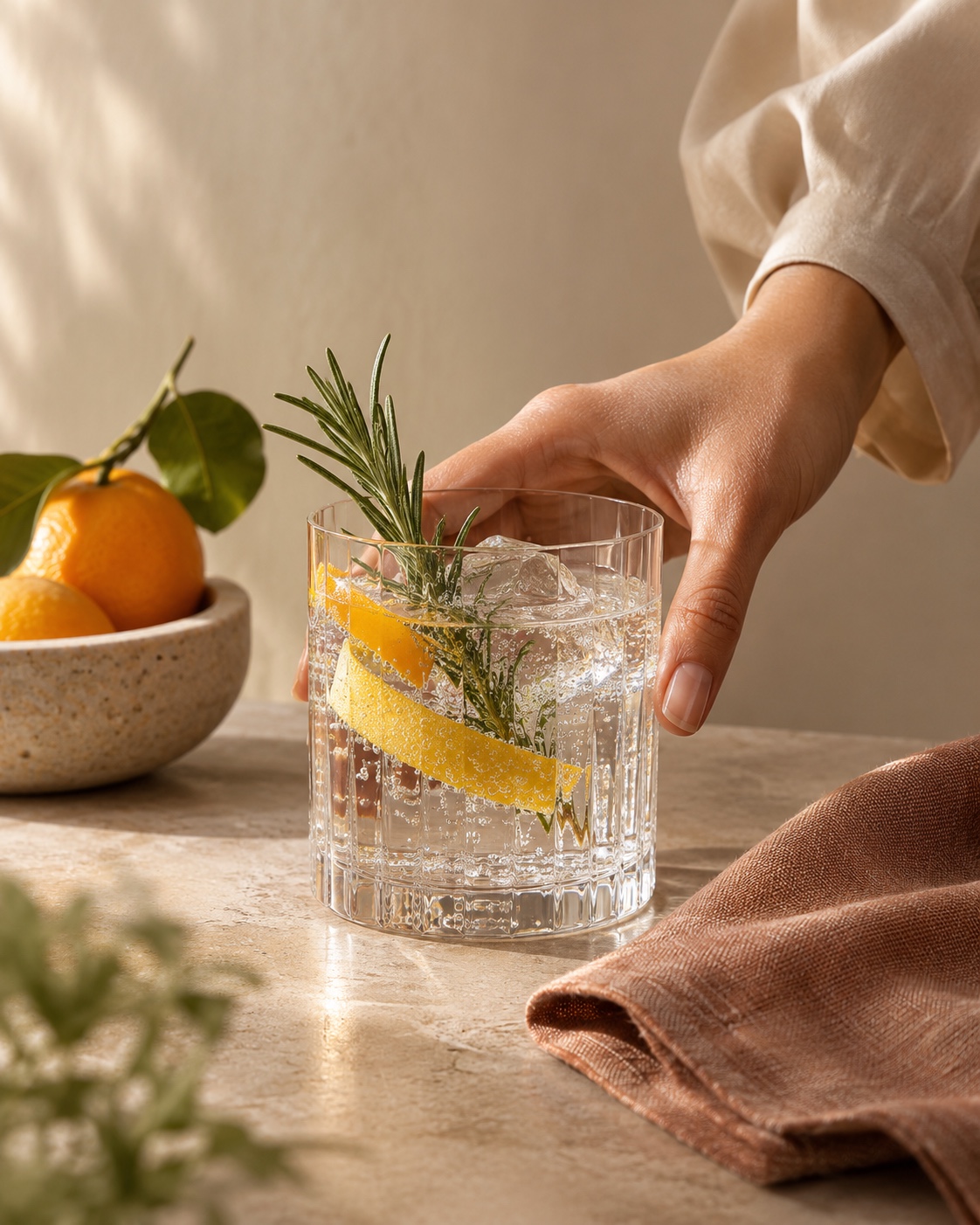
Sparkling water with citrus, an alcohol-free mixed drink, tea or another preferred option can make the evening feel complete. Read labels if avoiding alcohol entirely matters to you; products marketed as alternatives can differ.
The replacement does not need to detoxify anything or cancel a previous drink. Its job is to be something you enjoy choosing instead. Avoid turning the swap into a promise that one ingredient prevents cancer.
Make refills a choice
Keep track of your own glass and ask before a host tops it up. If you want a smaller serving, say so directly. Continuous refilling can make it difficult to know how much you have consumed.
You can also separate the activity from the drink. Meet for a meal, a show, a walk in suitable conditions or a daytime visit. That gives the event a purpose beyond keeping a glass full.
Use a short script
Try “I'm good with this, thanks,” “I'm taking a break from alcohol,” or “I'd love the alcohol-free version.” You do not need to keep providing new explanations if someone keeps asking.
Hosts can make this easier by offering attractive alcohol-free options without requiring a guest to request special treatment. Avoid announcing who is not drinking or guessing why. Giving everyone a straightforward choice is more welcoming than making one person defend theirs.
Thanks for your feedback! Couldn't send feedback. Try again?
Report this addition
What cutting back cannot replace
Reducing alcohol exposure does not replace a screening plan, assessment of a new breast symptom or a discussion of family history. If you notice a change that worries you, seek medical advice rather than treating a lifestyle change as a test of whether it goes away.
Likewise, a screening result is not permission to ignore prevention questions until the next appointment. Ask what you should report between checks and how to arrange follow-up. You can talk about several parts of breast health without claiming any one action guarantees prevention.
Thanks for your feedback! Couldn't send feedback. Try again?
If you find yourself repeatedly drinking more than you intend, struggling to reduce it, or feeling unwell when you do not drink, tell a healthcare professional. Ask how to make a safe plan. People with possible alcohol dependence should get medical guidance before suddenly stopping because withdrawal can be dangerous; NIAAA's treatment resources explain ways to seek care.
You can bring a brief description of your usual week and what you have already tried. The aim is to help someone understand your situation, not to produce a perfect record or prove that you deserve support. A useful appointment ends with a next step and a way to follow up.
Thanks for your feedback! Couldn't send feedback. Try again?
Report this addition
Frequently asked questions
Does alcohol raise breast cancer risk?
Yes. Major cancer organizations describe a link even at low consumption, with greater risk as drinking increases. The effect is not limited to heavy drinking.
Is wine safer than spirits for cancer risk?
Wine still contains ethanol. The type of drink does not make alcohol free of cancer risk, and red wine is not a prevention treatment.
Does one drink mean I will get cancer?
No. Risk describes probabilities across groups, not a guaranteed outcome. Your personal history belongs in a discussion with your clinician.
Are the 17, 19 and 22 figures about breast cancer alone?
No. NCI presents those as estimates for alcohol-related cancers combined in women. They should not be labeled as breast-cancer-only numbers.
Is cutting back worthwhile if I am not ready to stop?
It reduces alcohol exposure and can be a practical starting point. Ask for support if changing your drinking feels difficult or you are unsure how to do it safely.
Thanks for your feedback! Couldn't send feedback. Try again?
Report this addition
Feedback Junction
Where Thoughts and Opinions Converge
peony
2016-03-05T01:31:28.476Z
Fantastic points
Keep exploring
Search AllWomenStalk for your next read.
Add allwomenstalk.com as a preferred source on Google to see more of our trusted coverage when you search.
Don't Miss the Latest Version
Get the latest stories, save favorites, and share with friends — all in one place.


Feedback Junction
Where Thoughts and Opinions Converge
2016-03-05T01:31:28.476Z